
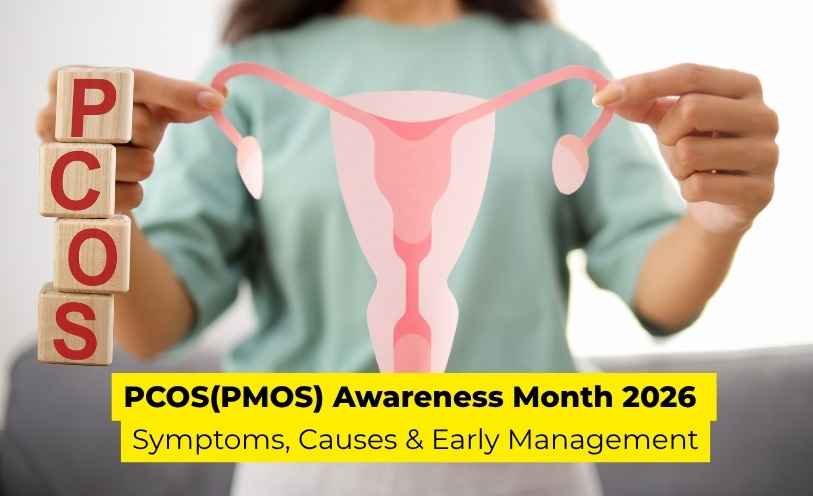
September is observed as PMOS Awareness Month, making it an important time to talk about one of the most common hormonal and metabolic conditions affecting women. In 2026, the condition previously known as Polycystic Ovary Syndrome (PCOS) has officially been renamed Polyendocrine Metabolic Ovarian Syndrome (PMOS).
The new name reflects a broader understanding of the condition. PMOS is not simply an ovarian problem. It can involve hormonal, metabolic, reproductive, skin and mental health changes, which is why awareness and timely medical care are important. The global name-change process was developed through extensive consultation involving patients, healthcare professionals and international organisations.
What Is PMOS?
Polyendocrine Metabolic Ovarian Syndrome is a long-term hormonal and metabolic condition that can affect women during their reproductive years. It may interfere with regular ovulation and can be associated with increased androgen activity and changes in insulin metabolism.
The name change from PCOS to PMOS is significant because the earlier term could give the impression that ovarian cysts were the central feature of the condition. In reality, the ovarian appearance sometimes seen in PMOS represents multiple small follicles, rather than conventional pathological ovarian cysts. The new terminology is intended to better represent the endocrine, metabolic and ovarian aspects of the condition.
PMOS can affect different women in different ways. Some may primarily experience irregular periods, while others may notice acne, unwanted facial or body hair, difficulty with weight management or challenges with fertility. Not everyone with PMOS will have all of these symptoms.
Common Symptoms of PMOS
One of the most noticeable signs of PMOS can be an irregular menstrual cycle. Periods may occur less frequently than expected, become unpredictable, or sometimes stop for several months. Irregular ovulation can also make it more difficult for some women to conceive.
Increased androgen activity may lead to symptoms such as unwanted facial or body hair, persistent acne or thinning hair on the scalp. Changes in weight or difficulty losing weight may also occur, although PMOS can affect women across different body sizes. Having a higher body weight can worsen some metabolic features, but it is not a requirement for PMOS.
Some women discover they have PMOS only when they seek medical advice for difficulty becoming pregnant. Others may be diagnosed after seeking help for irregular periods, acne or excessive hair growth. Because symptoms can vary considerably, there is no single symptom that confirms PMOS.
What Causes PMOS?
There is no single cause of PMOS. It is believed to develop through a combination of genetic, hormonal and metabolic factors. Insulin resistance is an important feature for many women with PMOS. When the body does not respond effectively to insulin, the pancreas may produce more insulin to maintain normal blood glucose levels. Higher insulin levels can interact with ovarian hormone production and contribute to increased androgen activity and irregular ovulation.
Genetic susceptibility also appears to play a role, which means women with a family history of the condition may have a higher likelihood of developing it. Lifestyle factors can influence symptoms and metabolic health, but PMOS should not be viewed as simply the result of poor diet, lack of exercise or excess weight.
This broader understanding is one reason the move toward the PMOS name is important. It recognises that the condition can involve several interconnected systems rather than focusing only on the ovaries.
Why Is Early Care Important?
Early recognition of PMOS can make a meaningful difference to long-term health. The condition is associated not only with reproductive symptoms but also with metabolic concerns such as insulin resistance, abnormal blood glucose levels, dyslipidaemia and an increased risk of developing type 2 diabetes and cardiovascular problems.
Irregular ovulation can also affect fertility. In addition, some women may experience psychological concerns such as anxiety, depression or reduced self-esteem, particularly when symptoms such as acne, unwanted hair growth or weight changes affect their confidence.
Early care does not mean that every woman requires the same treatment. Management is individualised according to symptoms, reproductive goals, metabolic health and personal priorities. Healthy eating, regular physical activity, adequate sleep and weight management when appropriate can form an important part of overall care. Medical treatment may also be recommended depending on the individual's symptoms and health needs.
Read Also : PCOD: What You Need to KnowHow Is PMOS Diagnosed?
PMOS cannot be diagnosed through one symptom or one test. A gynaecologist generally considers the woman's menstrual history, symptoms, medical history and examination findings. Blood tests may be recommended to assess hormones and metabolic health, while an ultrasound may sometimes be used as part of the assessment.
Importantly, the presence of multiple follicles on an ovary does not by itself mean that a woman has PMOS. A healthcare professional needs to consider the complete clinical picture and rule out other conditions that can cause similar symptoms.
Women with persistent irregular periods, unexplained excessive hair growth, troublesome acne, significant changes in weight or difficulty conceiving should consider discussing these concerns with a qualified healthcare professional rather than assuming they are simply normal hormonal changes.
PMOS Awareness Month: Why Awareness Matters
PMOS Awareness Month is an opportunity to move the conversation beyond fertility and ovarian health alone. The new name, Polyendocrine Metabolic Ovarian Syndrome, highlights the fact that the condition can have endocrine, metabolic and reproductive effects.
Greater awareness can encourage women to recognise symptoms earlier and seek appropriate care. It can also reduce misconceptions, including the belief that PMOS only affects women who are overweight or that ovarian cysts are required for diagnosis.
The international medical community is currently transitioning to the PMOS terminology, with the new name expected to be fully incorporated into the international guideline update planned for 2028.
If you are looking for a Gynaecologist in Sector 10 Gurgaon, consulting a qualified specialist can help you understand whether your symptoms need further evaluation and guide you toward an individualised management plan.
Conclusion
PMOS is a complex hormonal and metabolic condition that can affect menstrual health, ovulation, fertility, skin, hair and long-term metabolic wellbeing. The 2026 transition from PCOS to Polyendocrine Metabolic Ovarian Syndrome (PMOS) reflects the growing understanding that the condition involves much more than the ovaries.
Recognising symptoms early and receiving appropriate medical guidance can help women manage their symptoms and address potential long-term health risks. If your periods are consistently irregular, you are experiencing unwanted hair growth or persistent acne, or you have concerns about fertility or metabolic health, it is worth speaking with a qualified Gynaecologist in Sector 10 Gurgaon.

Dr Nehal Dhaduk
Qualification: MBBS, DNB - Obstetrics & Gynecology
Specialization: Gynecologist, Obstetrician, Reproductive Endocrinologist (Infertility)
Designation: Consultant
Clinic: Atharva Clinic, Sector 10A, Gurgaon
Dr Nehal Dhaduk is an evidence-based women's healthcare provider with special interest in pregnancy care, menopause management, infertility, and women's health. Her clinical approach focuses on accurate diagnosis and patient education.
