
Understanding Placenta: The Lifeline Between Mother and Baby
Pregnancy is a remarkable journey, and every detail about your baby’s growth matters — including where the placenta is positioned. Two common placental locations often discussed during ultrasound scans are the anterior placenta and the posterior placenta. While both are typically normal, understanding their differences can help expectant mothers feel more confident and informed about their pregnancy.
What Is the Placenta and Why Is It Important?
The placenta is a vital organ that forms inside the uterus during pregnancy. It acts as a lifeline between the mother and the baby, supplying oxygen, nutrients, and hormones essential for fetal development while also removing waste products.
Role of the Placenta in Fetal Development
This temporary but crucial organ attaches to the uterine wall and connects to the baby through the umbilical cord. It ensures the baby receives a balanced supply of oxygen and nutrients and helps regulate body temperature and immunity.
A healthy placenta directly contributes to a healthy pregnancy - making its position an important aspect to monitor through routine ultrasounds.
Understanding Placental Positions: Anterior vs. Posterior
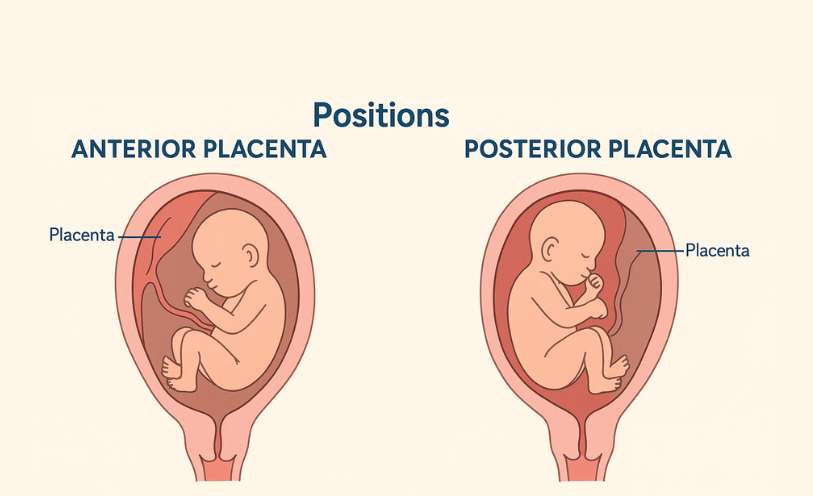
The placenta can attach itself in various locations in the uterus. The most common ones are anterior (front wall) and posterior (back wall).
What Is an Anterior Placenta?
An anterior placenta attaches to the front wall of the uterus, closer to the mother’s abdomen. It’s perfectly normal and doesn’t usually cause complications. However, it can sometimes make it harder to feel baby movements early in pregnancy since the placenta cushions the kicks.
What Is a Posterior Placenta?
A posterior placenta, on the other hand, attaches to the back wall of the uterus — the side closest to the mother’s spine. This is also a normal and healthy position. Many women with posterior placentas feel fetal movements earlier since there’s less cushioning in front of the uterus.
How Placental Position Is Determined During Ultrasound
Your obstetrician or Gynaecologist in Sector 10A Gurgaon will determine placental position during an ultrasound, usually in the second trimester. The report will mention whether the placenta is anterior, posterior, fundal (top), or low-lying.
| Aspect | Anterior Placenta | Posterior Placenta |
|---|---|---|
| Location | Front wall of uterus | Back wall of uterus |
| Fetal Movements | Felt slightly later due to cushioning | Felt earlier and stronger |
| Ultrasound Imaging | Sometimes slightly harder to visualize baby | Easier to visualize baby |
| Delivery Impact | Usually none | Usually none |
| Risks | Minimal unless low-lying | Minimal unless other issues exist |
Placental Location and Its Impact on Pregnancy
Neither position is inherently better or worse. What matters most is that the placenta isn’t blocking the cervix and that it remains healthy throughout the pregnancy.
Is One Placental Position Better Than the Other?
There’s no single “best” position. Both anterior and posterior placentas can support a healthy pregnancy. However, monitoring is crucial, especially if the placenta is low-lying or if you experience bleeding or discomfort.
When to Consult Your Gynaecologist
Consult a specialist like Dr. Nehal Dhaduk, a trusted obstetrician in Sector 10A Gurgaon, if you experience unusual symptoms or have concerns about your ultrasound results. Regular prenatal visits at Atharva Gynae Clinic ensure timely monitoring and peace of mind.
Anterior Placenta: Common Myths and Facts
Myth 1: Anterior placenta causes complications.
Fact: Most anterior placentas function perfectly well and do not cause problems.
Myth 2: It always leads to a C-section.
Fact: Delivery mode depends on multiple factors, not just placental location.
Posterior Placenta: Myths vs. Facts
Myth 1: Posterior placenta guarantees normal delivery.
Fact: Labour outcomes depend on the baby’s position, mother’s health, and other factors.
Myth 2: Posterior placenta is always healthier.
Fact: Both anterior and posterior positions are normal variations of a healthy placenta.
Placenta Previa and Low-Lying Placenta: How They Differ
Sometimes, the placenta may attach too low in the uterus, partially or completely covering the cervix — a condition known as placenta previa.
Causes and Risk Factors
- Previous cesarean delivery
- Multiple pregnancies
- Advanced maternal age
Monitoring and Medical Management
Regular ultrasounds and medical supervision are essential to manage placenta previa effectively and ensure both mother and baby’s safety.
How Dr. Nehal Dhaduk Can Help You at Atharva Gynae Clinic
At Atharva Gynae Clinic, Sector 10A Gurgaon, Dr. Nehal Dhaduk provides comprehensive antenatal care and expert monitoring of placental health.
Personalized Pregnancy Monitoring
Each patient receives individualized guidance and ultrasound assessments to track placental position and fetal well-being.
Expert Guidance on Placental Health
Dr. Dhaduk’s experience as a Gynaecologist in Sector 10A Gurgaon ensures that every expectant mother gets the best advice and support.
Advanced Ultrasound and Diagnostic Facilities
Atharva Gynae Clinic is equipped with modern ultrasound facilities for accurate diagnosis and safe pregnancy tracking.
Frequently Asked Questions (FAQs)
1. Is anterior placenta dangerous?
No, it’s a normal variation and usually doesn’t cause issues.
2. When can I feel baby movements with an anterior placenta?
Usually between 20–24 weeks, slightly later than usual.
3. Does placenta position affect baby’s growth?
No, as long as it’s healthy and not low-lying.
4. Can placenta change position later in pregnancy?
Yes, it can “move up” as the uterus grows.
5. Should I be worried if my placenta is low-lying?
It needs monitoring, but it often moves up as pregnancy progresses.
6. Who can I consult for placental health in Gurgaon?
Visit Dr. Nehal Dhaduk at Atharva Gynae Clinic, Sector 10A Gurgaon for expert care.
Conclusion: Understanding Your Placental Position for a Healthy Pregnancy
Whether you have an anterior placenta or a posterior placenta, both are usually normal and healthy. What truly matters is consistent medical follow-up with a trusted expert.
If you’re an expecting mother in Gurgaon, consult Dr. Nehal Dhaduk at Atharva Gynae Clinic, Sector 10A Gurgaon, for personalized care, advanced monitoring, and compassionate support throughout your pregnancy journey.
